Race debrief
CCYC B2 Race Debrief
The line required a port-tack crossing, but IWM captured the extreme pin advantage. We stayed close through the first beat, sailed two excellent kite jibes, and gained at a tight mark rounding. The difference came from heavy-air main trim, a douse that left the kite on the wrong side of the forestay, and slow jib handling through repeated final-leg tacks.
Quick Summary
The line required a port-tack crossing, but IWM captured the extreme pin advantage. We stayed close through the first beat, sailed two excellent kite jibes, and gained at a tight mark rounding. The difference came from heavy-air main trim, a douse that left the kite on the wrong side of the forestay, and slow jib handling through repeated final-leg tacks.
Start Analysis
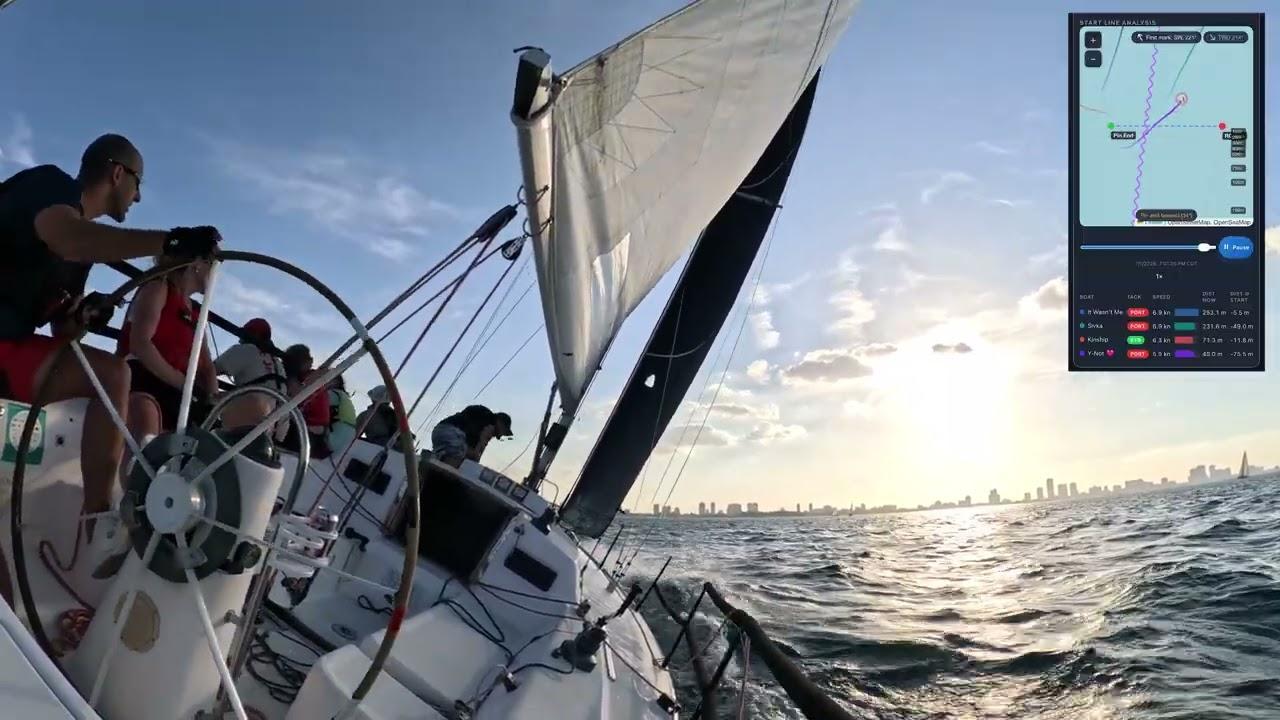
The line was so skewed that several boats could not cross it on starboard tack. Our 3-2-1 sequence was orderly but positioned lower than necessary. We tacked onto port to cross with clear room ahead of Liquid Lounge. The start was safe and functional, but IWM started at the extreme favored pin and gained an immediate distance advantage that we never fully recovered.
What Went Well
- The crew marked five degrees of rudder on the wheel, creating a concrete reference for future heavy-air helm review.
- Katie and Gus swapped and partially flaked the Evolution main before leaving the harbor, avoiding a difficult departure with a half-loaded sail.
- The first beat kept us within one boat length of Kinship despite unresolved main-trim questions.
- The kite hoist was largely smooth, and both jibes were excellent in substantial pressure with the boat and sail staying under control.
- A tight inside rounding near the NE mark recovered distance when Kinship had to route around a cruiser.
What Cost Us
- The start was too far from the heavily favored pin, giving IWM a large initial advantage.
- Heavy-air main trim took too long to settle; traveler and mainsheet coordination did not consistently control heel and helm.
- Jib-car settings never felt fully dialed in, and the crew had no practice tacks before the start to establish the heavy-air setup.
- The Mexican douse left the kite flying across the forestay, costing several boat lengths while the crew recovered it.
- Six tacks on the final beat exposed a late old-sheet release, slow jib trim, extra grinding, and repeated skirting losses.
- Puff calls faded as the race progressed, making it harder for the main trimmer to prepare for the largest gusts.
Biggest Lesson
Heavy-air maneuvers need shared definitions before the countdown begins. Clear douse language, continuous puff calls, and agreed ownership of sail controls matter more as the pressure and noise rise.
WakeRoute Replay / Data Notes
WakeRoute captured the track, but the onboard SD card was missing, so the race video does not have the usual instrument-data overlays. The replay is still useful for reviewing the pin bias, mark-rounding gains, and number of final-leg tacks.
Gear or Tech Used
Photo/Video Embed
Final Takeaway
The race was close enough that handling details mattered. Better pin-end positioning, earlier heavy-air trim agreement, sustained puff calls, and a cleaner loaded-sheet douse and tack workflow are the clearest paths forward.